#include <Process.hpp>
◆ PTY()
◆ ~PTY()
◆ closeMasterChannel()
| void stc::Unix::PTY::closeMasterChannel |
( |
| ) |
|
|
inline |
◆ closeSlaveChannel()
| void stc::Unix::PTY::closeSlaveChannel |
( |
| ) |
|
|
inline |
◆ die()
| void stc::Unix::PTY::die |
( |
| ) |
|
|
inline |
Can be used to close the PTY. This should usually not be done unless you have an explicit reason to force-terminate it. This is primarily intended to be called internally by the child process, as destructors are not invoked with exec.
- See also
- https://stackoverflow.com/a/17135211
◆ readData()
| ssize_t stc::Unix::PTY::readData |
( |
std::stringstream & |
out | ) |
|
|
inline |
◆ readFd()
| virtual int stc::Unix::PTY::readFd |
( |
| ) |
|
|
inlineoverridevirtual |
◆ writeToStdin()
| ssize_t stc::Unix::PTY::writeToStdin |
( |
const std::string & |
data | ) |
|
|
inline |
◆ master
| int stc::Unix::PTY::master |
◆ slave
| int stc::Unix::PTY::slave |
The documentation for this struct was generated from the following file:
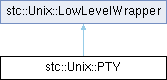
 Public Member Functions inherited from stc::Unix::LowLevelWrapper